Online first
Current issue
Archive
Special Issues
About the Journal
Publication Ethics
Anti-Plagiarism system
Instructions for Authors
Instructions for Reviewers
Editorial Board
Editorial Office
Contact
Reviewers
All Reviewers
2025
2024
2023
2022
2021
2020
2019
2018
2017
2016
General Data Protection Regulation (RODO)

RESEARCH PAPER
Effectiveness of medical simulation among nursing students
1
Department of Nursing and Public Health, Institute of Health Sciences, College of Medical Sciences, University of Rzeszów, Poland
2
Department of Medical Informatics and Statistics with E-learning Laboratory, Medical University, Lublin, Poland
3
Faculty of Health Sciences, Radom Higher School, Radom, Poland
4
Collegium Medicum, University of Rzeszów, Poland
5
Department of Epidemiology, Institute of Rural Health, Lublin, Poland
Corresponding author
Paulina Maria Kaczor-Szkodny
Department of Epidemiology, Instytut Medycyny Wsi im. Witolda Chodźki, ul. Jaczewskiego 2, 20-090, Lublin, Poland
Department of Epidemiology, Instytut Medycyny Wsi im. Witolda Chodźki, ul. Jaczewskiego 2, 20-090, Lublin, Poland
Ann Agric Environ Med. 2026;33(1):105-111
KEYWORDS
TOPICS
ABSTRACT
Introduction and objective:
Medical simulation is experiencing rapid growth in medical education, including nursing. Combining traditional teaching with medical simulation allows nursing students to develop both technical and non-technical skills in a controlled, safe environment. The aim of the study is to evaluate the effectiveness of nursing student education using medical simulation by assessing the simulation assumptions and student satisfaction and confidence in the learning process, along with an analysis of their predictors.
Material and methods:
The study was conducted from October 2023 – May 2024, and involved 306 nursing students from the Zamojska Academy in Zamość and the WSEI Academy in Lublin, both in eastern Poland. The Simulation Design Scale (SDS) and Student Satisfaction And Self-Confidence In Learning (SSCL) tools were used in the study.
Results:
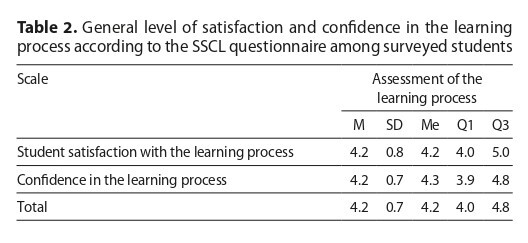
Nursing students experience confidence and satisfaction in the learning process, were significantly more pronounced among rural residents (p<0.05). Self-confidence and satisfaction in the learning process were negatively correlated with age (p<0.05), and are positively influenced by higher evaluation and importance of simulation objectives, and information and evaluation of problem solving, and negatively correlated by importance of problem solving (p<0.05).
Conclusions:
The different elements of medical simulation teaching are highly valued by nursing students in the learning process. The evaluation of the assumptions of medical simulation and the importance of the role of prebriefing and debriefing as its most important elements, allow the prediction of the level of confidence and satisfaction of students, translating into the achievement of the assumed learning outcomes in terms of knowledge, skills and social competences.
Medical simulation is experiencing rapid growth in medical education, including nursing. Combining traditional teaching with medical simulation allows nursing students to develop both technical and non-technical skills in a controlled, safe environment. The aim of the study is to evaluate the effectiveness of nursing student education using medical simulation by assessing the simulation assumptions and student satisfaction and confidence in the learning process, along with an analysis of their predictors.
Material and methods:
The study was conducted from October 2023 – May 2024, and involved 306 nursing students from the Zamojska Academy in Zamość and the WSEI Academy in Lublin, both in eastern Poland. The Simulation Design Scale (SDS) and Student Satisfaction And Self-Confidence In Learning (SSCL) tools were used in the study.
Results:
Nursing students experience confidence and satisfaction in the learning process, were significantly more pronounced among rural residents (p<0.05). Self-confidence and satisfaction in the learning process were negatively correlated with age (p<0.05), and are positively influenced by higher evaluation and importance of simulation objectives, and information and evaluation of problem solving, and negatively correlated by importance of problem solving (p<0.05).
Conclusions:
The different elements of medical simulation teaching are highly valued by nursing students in the learning process. The evaluation of the assumptions of medical simulation and the importance of the role of prebriefing and debriefing as its most important elements, allow the prediction of the level of confidence and satisfaction of students, translating into the achievement of the assumed learning outcomes in terms of knowledge, skills and social competences.
PEER REVIEW INFORMATION
Article has been screened for originality
REFERENCES (29)
1.
Rutherford-Hemming T, Nye C, Coram C. Using simulation for clinical practice hours in nurse practitioner education in the United States: a systematic review. Nurse Educ Today. 2016;37:128–135.
2.
Al-Wassia H, Bamehriz M, Atta G, et al. Effect of training using high- versus low-fidelity simulator mannequins on neonatal intubation skills of pediatric residents: a randomized controlled trial. BMC Med Educ. 2022;22(1):497.
3.
Li YY, Au ML, Tong LK, et al. High-fidelity simulation in undergraduate nursing education: a meta-analysis. Nurse Educ Today. 2022;111:105291.
4.
Wojcieszek A, Kurowska A, Wróbel A, et al. Analysis of high-fidelity simulation effects and their connection with educational practices in early nursing education. BMC Nurs. 2025;24(1):457.
5.
Saied H. The impact of simulation on pediatric nursing students’ knowledge, self-efficacy, satisfaction, and confidence. J Educ Pract. 2017;8(11):95–102.
6.
Szara M, Klukow JW. New technologies used in the education of nurses and midwives. Nurs 21st Century. 2023;22(3):181–194.
7.
Tomaszewska K, Majchrowicz B. Medical simulation as an educational tool in the opinion of nursing students. Nurs 21st Century. 2022;21(2):80–87.
8.
Alamrani MH, Alammar KA, Alqahtani SS, et al. Comparing the effects of simulation-based and traditional teaching methods on the critical thinking abilities and self-confidence of nursing students. J Nurs Res. 2018;26(3):152–157.
9.
Elendu C, Amaechi DC, Okatta AU, et al. The impact of simulation-based training in medical education: a review. Medicine (Baltimore). 2024;103(27):e38813.
10.
Liu YP, Qi X, Ma Y, et al. Ultrasonic and microwave co-extraction optimization of polysaccharide of Portulaca oleracea L. technology and its effect on ulcerative colitis. SAS J Med. 2021;7(12):666–673.
11.
Loubbairi S, Lahlou L, Amechghal A, et al. The impact of simulation on the development of critical thinking and reflection among nursing and medical students: a systematic review. Korean J Med Educ. 2025;37(2):187–202.
12.
Shorey S, Ng ED. The use of virtual reality simulation among nursing students and registered nurses: a systematic review. Nurse Educ Today. 2021;98:104662.
13.
Studnicka K, Zarzycka D. Adaptacja kulturowa i walidacja psychometryczna skali Oceny Scenariusza Symulacyjnego (Simulation Design Scale, SDS) – etap wstępny. In: Międzynarodowa Konferencja Naukowa: Osiągnięcia naukowe pielęgniarstwa polskiego w kontekście wyzwań procesu globalizacji jutra. Lublin: Wydawnictwo Archidiecezji Lubelskiej GAUDIUM; 2019. p. 289–291.
14.
Studnicka K, Zarzycka D, Zalewski J. Student satisfaction and self-confidence in learning scale (SSCL)—reliability and validity test of the Polish version [Internet]. 2023 [cited 2025 Aug 29]. Available from: https://www.signavitae.com/art....
15.
Draper NR, Smith H. Applied regression analysis. 2nd ed. New York: Wiley; 1981. p. 709 (Wiley Series in Probability and Mathematical Statistics).
16.
Harrell FE. Regression modeling strategies: with applications to linear models, logistic regression, and survival analysis. 5th ed. New York: Springer; 2010. p. 568 (Springer Series in Statistics).
17.
Odahowski CL, Crouch EL, Zahnd WE, et al. Rural-urban differences in educational attainment among registered nurses: implications for achieving an 80% BSN workforce. J Prof Nurs. 2021;37(2):404–410.
18.
Hassan EA, Mohamed AM, Eltaib FA, et al. Determinants of nursing students’ satisfaction with blended learning. BMC Nurs. 2024;23(1):766.
19.
Baernholdt M, Mark BA. The nurse work environment, job satisfaction and turnover rates in rural and urban nursing units. J Nurs Manag. 2009;17(8):994–1001.
20.
Sałacińska I, Trojnar P, Gebriné KÉ, et al. A comparative study of traditional high-fidelity (manikin-based) simulation and virtual high-fidelity simulations concerning their effectiveness and perception. Front Med (Lausanne). 2025;12:1523768.
21.
Albagawi B, Grande RAN, Berdida DJE, et al. Correlations and predictors of nursing simulation among Saudi students. Nurs Forum. 2021;56(3):587–595.
22.
Gillan PC, Johnston S. Nursing students’ satisfaction and selfconfidence with standardized patient palliative care simulation focusing on difficult conversations. Palliat Support Care. 2024;22(5):1237–1244.
23.
Cho MK, Kim MY. Factors associated with student satisfaction and self-confidence in simulation learning among nursing students in Korea. Healthcare (Basel). 2023;11(8):1060.
24.
Kuesakul K, Nuampa S, Pungbangkadee R, et al. Evaluation of antenatal simulation-based learning on satisfaction and self-confidence levels among Thai undergraduate nursing students during the COVID-19 pandemic: a mixed-method study. BMC Nurs. 2024;23(1):161.
25.
Olaussen C, Heggdal K, Tvedt CR. Elements in scenario-based simulation associated with nursing students’ self-confidence and satisfaction: a cross-sectional study. Nurs Open. 2020;7(1):170–179.
26.
Bdiri Gabbouj S, Zedini C, Naija W. Nursing students’ satisfaction and self-confidence with simulation-based learning and its associations with simulation design characteristics and educational practices. Adv Med Educ Pract. 2024;15:1093–1102.
27.
Lee EK, Ji EJ. The mediating role of flow in the relationship between simulation design and simulation educational satisfaction in Korean nursing students: a cross-sectional study. BMC Nurs. 2024;23(1):279.
28.
Gaspar AD, Banayat AC. Undergraduate student nurses’ satisfaction, self-confidence, and perception of high-fidelity simulation-based learning on critically ill patients. Acta Med Philipp. 2024;58(12). Available from: https://actamedicaphilippina.u....
29.
Blaak H, Lkoul A, Iziki H, et al. Satisfaction and self-confidence of Moroccan nursing students in simulation-based learning and their associations with simulation design characteristics and educational practices. Nurs Rep. 2025;15(5):138.
Share
RELATED ARTICLE
| eISSN: | 1898-2263 |
| ISSN: | 1232-1966 |


Generation of the DOI (Digital Object Identifier) - task financed under the agreement No NrRCN/SP/0532/2021/1 by the Minister of Science and Higher
© 2006-2026 Journal hosting platform by Bentus
We process personal data collected when visiting the website. The function of obtaining information about users and their behavior is carried out by voluntarily entered information in forms and saving cookies in end devices. Data, including cookies, are used to provide services, improve the user experience and to analyze the traffic in accordance with the Privacy policy. Data are also collected and processed by Google Analytics tool (more).
You can change cookies settings in your browser. Restricted use of cookies in the browser configuration may affect some functionalities of the website.
You can change cookies settings in your browser. Restricted use of cookies in the browser configuration may affect some functionalities of the website.