Online first
Current issue
Archive
Special Issues
About the Journal
Publication Ethics
Anti-Plagiarism system
Instructions for Authors
Instructions for Reviewers
Editorial Board
Editorial Office
Contact
Reviewers
All Reviewers
2025
2024
2023
2022
2021
2020
2019
2018
2017
2016
General Data Protection Regulation (RODO)

RESEARCH PAPER
Association between mothers’ feeding practices and food neophobia in primary school-aged children from the Pomeranian Province of northern Poland
1
Department of Commodity Science, Medical University, Gdańsk, Poland
2
Department of Clinical Dietetics, Medical University, Warsaw, Poland
3
Department of Nutrition, Harvard T.H. Chan School of Public Health, United States
Corresponding author
Magdalena Skotnicka
Department of Commodity Science, Gdański Uniwersytet Medyczny, M.Skłodowskiej-Curie, 80-210, Gdańsk, Poland
Department of Commodity Science, Gdański Uniwersytet Medyczny, M.Skłodowskiej-Curie, 80-210, Gdańsk, Poland
KEYWORDS
childrenfood neophobiaChild Food Neophobia Scale (CFNS)feeding practicesnutritional parenting strategiesComprehensive Feeding Practices Questionnaire (CFPQ)
TOPICS
ABSTRACT
Introduction and objective:
Food neophobia—reluctance to try unfamiliar foods—is common in school-aged children and may reduce diet quality. Parental feeding practices strongly influence children’s eating behaviours. The aim of the study is to assess food neophobia in children, based on mothers’ reports, and to analyze maternal feeding strategies in relation to neophobia levels.
Material and methods:
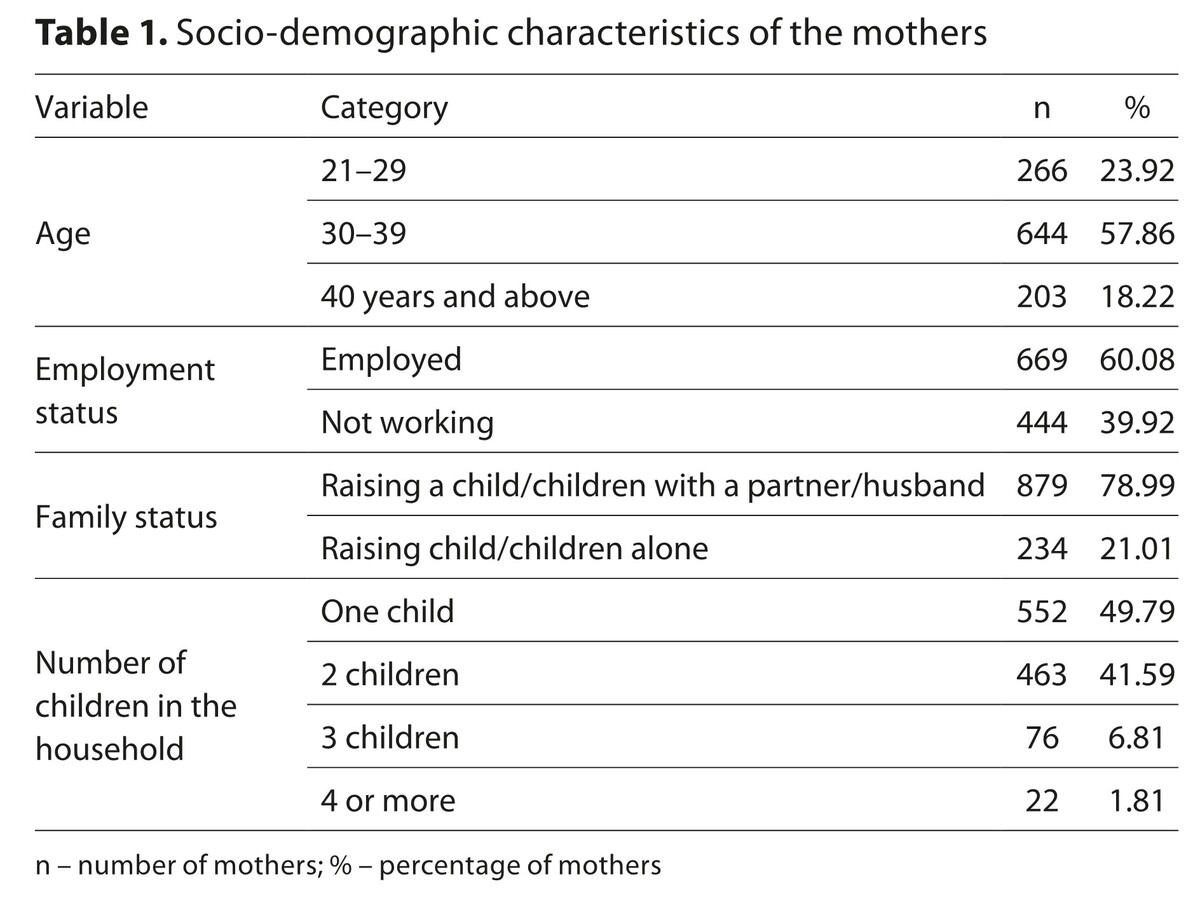
The study included 1,113 mothers of children aged 7–15. Data were collected using the Child Food Neophobia Scale (CFNS) and a shortened Comprehensive Feeding Practices Questionnaire (CFPQ). Statistical analyses included Kruskal–Wallis and ANOVA tests with post hoc analyses, linear regression, and factor analysis (p < 0.05).
Results:
Low and high food neophobia were observed in 42.86% and 42.58% of children, respectively; 14.56% showed a neutral level. Mothers most frequently used encouragement and modelling. Higher neophobia was associated with more frequent use of monitoring and emotion regulation strategies (p < 0.05). Regression analysis (R² = 0.29) showed positive associations between neophobia and emotion regulation, control, food as a reward, and food environment (p < 0.05). Factor analysis identified two feeding styles: control-oriented (monitoring, control, restriction) and supportive (encouragement, modelling, environment). Mothers of highly neophobic children more often used control-oriented practices, while mothers of children with low neophobia preferred supportive strategies.
Conclusions:
Food neophobia is highly prevalent among Polish school-aged children. Maternal feeding practices are strongly related to its level. Supportive strategies are associated with lower neophobia, whereas restrictive and emotion-based practices are linked to higher neophobia. Interventions should promote supportive feeding approaches to increase dietary diversity.
Food neophobia—reluctance to try unfamiliar foods—is common in school-aged children and may reduce diet quality. Parental feeding practices strongly influence children’s eating behaviours. The aim of the study is to assess food neophobia in children, based on mothers’ reports, and to analyze maternal feeding strategies in relation to neophobia levels.
Material and methods:
The study included 1,113 mothers of children aged 7–15. Data were collected using the Child Food Neophobia Scale (CFNS) and a shortened Comprehensive Feeding Practices Questionnaire (CFPQ). Statistical analyses included Kruskal–Wallis and ANOVA tests with post hoc analyses, linear regression, and factor analysis (p < 0.05).
Results:
Low and high food neophobia were observed in 42.86% and 42.58% of children, respectively; 14.56% showed a neutral level. Mothers most frequently used encouragement and modelling. Higher neophobia was associated with more frequent use of monitoring and emotion regulation strategies (p < 0.05). Regression analysis (R² = 0.29) showed positive associations between neophobia and emotion regulation, control, food as a reward, and food environment (p < 0.05). Factor analysis identified two feeding styles: control-oriented (monitoring, control, restriction) and supportive (encouragement, modelling, environment). Mothers of highly neophobic children more often used control-oriented practices, while mothers of children with low neophobia preferred supportive strategies.
Conclusions:
Food neophobia is highly prevalent among Polish school-aged children. Maternal feeding practices are strongly related to its level. Supportive strategies are associated with lower neophobia, whereas restrictive and emotion-based practices are linked to higher neophobia. Interventions should promote supportive feeding approaches to increase dietary diversity.
PEER REVIEW INFORMATION
Article has been screened for originality
REFERENCES (41)
1.
Zhao J, Yu Z, Sun X, et al. Association between screen time trajectory and early childhood development in children in China. JAMA Pediatr. 2022;176:768–775.
2.
Reid C, Radesky J, Christakis D, et al. Children and adolescents and digital media. Pediatrics. 2016;138:5.
3.
Konikowska K, Kujawa K, Matera-Witkiewicz A, et al. Assessment of health status, emotional well-being, and the prevalence of overweight and obesity in children and adolescents in the PICTURE Study (Wroclaw, Poland). Nutrients. 2025;17(24):3817.
4.
Wang J, Zhou Q, Zhang Y, et al. Prevalence of multimorbidity among school-aged children in the Yangzhou District of China. Healthcare (Basel). 2025;13:1320.
5.
Szczyrska J, Jankowska A, Brzeziński M, et al. Prevalence of overweight and obesity in 6–7-year-old children: A result of 9-year analysis of a big city population in Poland. Int J Environ Res Public Health. 2020;17:3480.
6.
Długoński Ł, Platta A, Skotnicka M. The influence of school location and children’s nutritional model on the risk of obesity in Poland: Pilot study. Front Nutr. 2025;12:1466065.
7.
Appannah G, Murray K, Trapp G, et al. Dietary pattern trajectories across adolescence and early adulthood and their associations with childhood and parental factors. Am J Clin Nutr. 2021;113:36–46.
8.
Shloim N, Edelson LR, Martin N, et al. Parenting styles, feeding styles, feeding practices, and weight status in 4–12-year-old children: A systematic review of the literature. Front Psychol. 2015;6:1849.
9.
Larsen J, Hermans R, Sleddens E, et al. How parental dietary behavior and food parenting practices affect children’s dietary behavior: Interacting sources of influence? Appetite. 2015;89:246–257.
10.
Mazurek A, Palka A, Kowalski S, et al. Acceptance of muffins (sweet and savory) with the addition of T molitor, A diaperinus, A domesticus, R differens, considering psychological factors. Foods. 2024;13:1735.
11.
Łoboś P, Januszewicz A. Food neophobia in children. Pediatr Endocrinol Diabetes Metab. 2019;25:150–154.
12.
Ramalho C, Sampaio M, Rocha N, et al. Food neophobia among primary school children and their caregivers. Acta Port Nutr. 2016;7:10–13.
13.
Torres T, Gomes D, Mattos M. Factors associated with food neophobia in children: Systematic review. Rev Paul Pediatr. 2021;39:13.
14.
Johnson S, Davies P, Boles R, et al. Young children’s food neophobia characteristics and sensory behaviors are related to their food intake. J Nutr. 2015;145:2610–2616.
15.
Birch L, Doub A. Learning to eat: Birth to age 2 y. Am J Clin Nutr. 2014;99:723–728.
16.
Chong N, Ruopeng A, Lee S, et al. Correlates of picky eating and food neophobia in young children: A systematic review and meta-analysis. Nutr Rev. 2017;75:516–532.
17.
Lafraire J. Food rejections in children: Cognitive and social/environmental factors involved in food neophobia and picky eating behavior. Appetite. 2015;96:347–357.
18.
Firme J, Almeida P, Santos E, et al. Instruments to evaluate food neophobia in children: An integrative review with a systematic approach. Nutrients. 2023;15:22.
19.
Musher-Eizenman D, Holub S. Comprehensive feeding practices questionnaire: Validation of a new measure of parental feeding practices. J Pediatr Psychol. 2007;32:960–972.
20.
Lo BK, Park I, McTernan M, et al. Validation of a brief food parenting measure for fathers: A test of factorial validity, measurement invariance, internal reliability, and concurrent validity. Appetite. 2025;206:107815.
21.
Penilla C, Tschann J, Deardorff J, et al. Fathers’ feeding practices and children’s weight status in Mexican American families. Appetite. 2017;117:109–116.
22.
Tschann J, Gregorich S, Penilla C, et al. Parental feeding practices in Mexican American families: Initial test of an expanded measure. Int J Behav Nutr Phys Act. 2013;10:6.
23.
Hidalgo-Mendez J, Power T, Fisher J, et al. Child weight status and accuracy of perceived child weight status as predictors of Latina mothers’ feeding practices and styles. Appetite. 2019;142:104387.
24.
Laureati M, Bergamaschi V, Pagliarini E. Assessing childhood food neophobia: Validation of a scale in Italian primary school children. Food Qual Prefer. 2015;40:8–15.
25.
Kozioł-Kozakowska A, Piórecka B, Schlegel-Zawadzka M. Prevalence of food neophobia in pre-school children from southern Poland and its association with eating habits, dietary intake and anthropometric parameters: A cross-sectional study. Public Health Nutr. 2017;21:1106–1114.
26.
Laureati M, Bergamaschi V, Pagliarini E. School-based intervention with children: Peer modeling, reward and repeated exposure reduce food neophobia and increase liking of fruits and vegetables. Appetite. 2014;83:26–32.
27.
Dop D, Niculescu E. Food neophobia in preschool children. Rev Chim. 2020;71:39–44.
28.
Halland S, Bere E, Bjornara H. Food neophobia and its association with intake of fish and other selected foods in a Norwegian sample of toddlers: A cross-sectional study. Appetite. 2017;114:110–117.
29.
Maiz E, Balluerka N. Trait anxiety and self-concept among children and adolescents with food neophobia. Food Res Int. 2018;105:1054–1059.
30.
Kutbi H, Alhatmi A, Alsulami M, et al. Food neophobia and pickiness among children and associations with socioenvironmental and cognitive factors. Appetite. 2019;1:142.
31.
Maratos F, Staples P. Attentional biases towards familiar and unfamiliar foods in children: The role of food neophobia. Appetite. 2015;91:220.
32.
Neumark-Sztainer D, Wall M, Chen C, et al. Eating, activity, and weight-related problems from adolescence to adulthood. Am J Prev Med. 2018;55:133–141.
33.
Yee A, Lwin M, Ho S. The influence of parental practices on child promotive and preventive food consumption behaviors: A systematic review and meta-analysis. Int J Behav Nutr Phys Act. 2017;14:47.
34.
Mazza M, Morseth M, Torheim L. Association between parental feeding practices and children’s dietary intake: A cross-sectional study in the Gardermoen Region, Norway. Food Nutr Res. 2022;21:66.
35.
Barbosa C, Lopes C, Costa A, et al. Parental child-feeding practices at 4 years of age are associated with dietary patterns of 7-year-olds. J Hum Nutr Diet. 2023;36:1339–1348.
36.
Baker L, Fuglestad A. Parents’ use of coercive control practices with food is associated with poorer emotion regulation and increased emotional overeating in preschoolers. Appetite. 2024;107608.
37.
Fernandes C, Santos AF, Fernandes M, et al. Caregivers’ perceived emotional and feeding responsiveness toward preschool children: Associations and paths of influence. Nutrients. 2021;13:1334.
38.
Powell E, Frankel L, Hernandez D. The mediating role of child self-regulation of eating in the relationship between parental use of food as a reward and child emotional overeating. Appetite. 2017;113:78–83.
39.
Jansen P, Derks I, Mou Y, et al. Associations of parents’ use of food as reward with children’s eating behavior and BMI in a population-based cohort. Pediatr Obes. 2020;15:12662.
40.
Długoński Ł, Skotnicka M, Mikulec A. Socio-Demographic Determinants of Dietary Strategies of Mothers of School-Aged Children—A Study in Pomeranian Province. Nutrients. 2025;17:3514.
41.
Loth K, Nogueira de Brito J, Neumark-Sztainer D, et al. A qualitative exploration into the parent–child feeding relationship: How parents of preschoolers divide the responsibilities of feeding with their children. J Nutr Educ Behav. 2018;50:655–667.
Share
RELATED ARTICLE
| eISSN: | 1898-2263 |
| ISSN: | 1232-1966 |


Generation of the DOI (Digital Object Identifier) - task financed under the agreement No NrRCN/SP/0532/2021/1 by the Minister of Science and Higher
© 2006-2026 Journal hosting platform by Bentus
We process personal data collected when visiting the website. The function of obtaining information about users and their behavior is carried out by voluntarily entered information in forms and saving cookies in end devices. Data, including cookies, are used to provide services, improve the user experience and to analyze the traffic in accordance with the Privacy policy. Data are also collected and processed by Google Analytics tool (more).
You can change cookies settings in your browser. Restricted use of cookies in the browser configuration may affect some functionalities of the website.
You can change cookies settings in your browser. Restricted use of cookies in the browser configuration may affect some functionalities of the website.