Online first
Current issue
Archive
Special Issues
About the Journal
Publication Ethics
Anti-Plagiarism system
Instructions for Authors
Instructions for Reviewers
Editorial Board
Editorial Office
Contact
Reviewers
All Reviewers
2025
2024
2023
2022
2021
2020
2019
2018
2017
2016
General Data Protection Regulation (RODO)

CASE REPORT
The first autochthonous case of Dirofilaria immitis infection in a dog in eastern Poland – confirmed by post-mortem examination
1
Department of Parasitology and Fish Diseases. Faculty of Veterinary Medicine, University of Life Sciences, Lublin, Poland
2
Department of Pathomorphology and Forensic Veterinary Medicine, Faculty of Veterinary Medicine, University of Life Sciences, Lublin, Poland
3
Department of Epizootiology and Clinic of Infectious Diseases, Faculty of Veterinary Medicine, University of Life Sciences, Lublin, Poland
Corresponding author
Klaudiusz Szczepaniak
Department of Parasitology and Fish Diseases. Faculty of Veterinary Medicine, University of Life Sciences in Lublin, Akademicka 12, 20-033, Lublin, Poland
Department of Parasitology and Fish Diseases. Faculty of Veterinary Medicine, University of Life Sciences in Lublin, Akademicka 12, 20-033, Lublin, Poland
KEYWORDS
TOPICS
- Biological agents posing occupational risk in agriculture, forestry, food industry and wood industry and diseases caused by these agents (zoonoses, allergic and immunotoxic diseases)
- State of the health of rural communities depending on various factors: social factors, accessibility of medical care, etc.
ABSTRACT
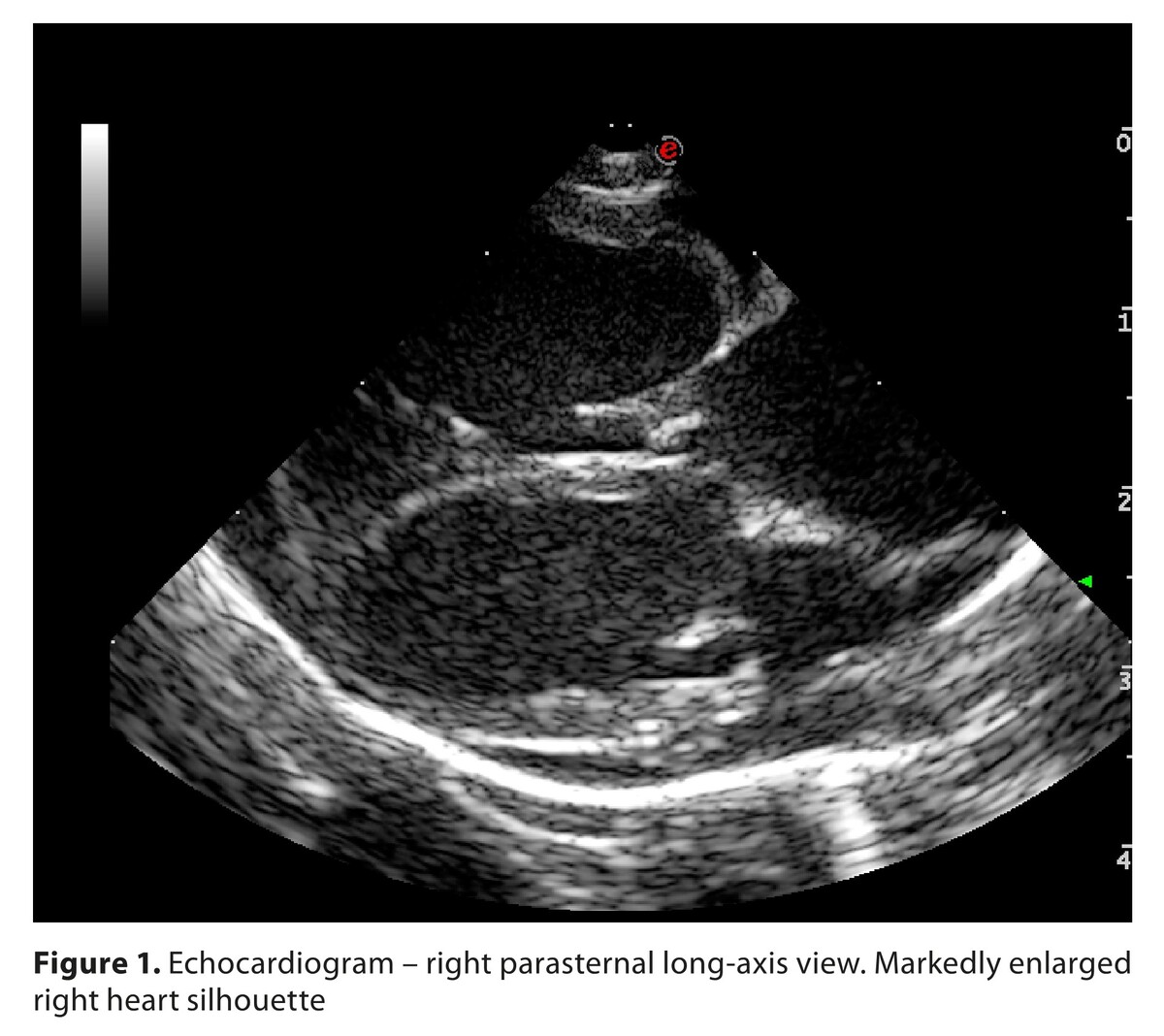
Dirofilaria immitis is an emerging parasitic threat in Central Europe with veterinary and zoonotic relevance. The case is described of a fatal autochthonous case in a seven-year-old Cavalier King Charles Spaniel from south-eastern Poland, with no travel history. The dog presented with dyspnea, ascites, cough, syncope, and cyanosis; echocardiography revealed right heart enlargement, tricuspid regurgitation, pulmonary hypertension, and left ventricular diastolic collapse. Euthanasia was performed due to poor prognosis. Necropsy identified six pre-adult worms in the right atrium, ventricle, and pulmonary outflow tract, with pulmonary congestion and oedema. This prepatent infection confirms local transmission of D. immitis in Poland and highlights the growing risk of autochthonous dirofilariosis in Central Europe, driven by climate change, vector spread, and animal movement. Vigilance is warranted given the public health implications and potential for misdiagnosis of human pulmonary lesions.
PEER REVIEW INFORMATION
Article has been screened for originality
REFERENCES (10)
1.
Hattendorf C, Lühken R. Dirofilaria immitis and D. repens in Europe: a systematic literature review on vectors, host range, and the spatial distribution in the 20th and 21st century. bioRxiv. 2025. https://doi.org/10.1101/2025.0....
2.
American Heartworm Society, 2024. Canine guidelines for the prevention, diagnosis, and management of heartworm (Dirofilaria immitis) infection in dogs. Available at: https://www.heartwormsociety.o... [Accessed 18 September 2025].
3.
Sutton RH. Pathology and pathogenesis of dirofilariasis. In Boreham PFL and Atwell RB, editors. Dirofilariasis. Boca Raton, FL: CRC Press; 1988. pp 99–132.
4.
Morchón R, Montoya-Alonso JA, Rodríguez-Escolar I, Carretón E. What has happened to heartworm disease in Europe in the last 10 years? Pathogens. 2022;11:1042. https://doi.org/10.3390/pathog....
5.
Hattendorf C, Lühken R. Vectors, host range, and spatial distribution of Dirofilaria immitis and D. repens in Europe: a systematic review. Infect Dis Poverty. 2025;14:58. https://doi.org/10.1186/s40249....
6.
Morchón R, Carretón E, González Miguel J, et al. Heartworm disease (Dirofilaria immitis) and their vectors in Europe. New distribution trends. Front Physiol. 2012;3.
7.
Alsarraf M, Levytska V, Mierzejewska EJ, et al. Emerging risk of Dirofilaria spp. infection in Northeastern Europe: high prevalence of Dirofilaria repens in sled dog kennels from the Baltic countries. Sci Rep. 2021;11:1068. https://doi.org/10.1038/s41598....
8.
Świątalska A, Demiaszkiewicz AW. Pierwszy w Polsce rodzimy przypadek inwazji Dirofilaria immitis u psa. Życie Weter. 2012;87:836–839.
9.
Kandefer-Gola M, Żebrowski K. Inwazja Dirofilaria immitis u psa – opis przypadku. Mag Weter. 2022;31(289):52–59.
10.
Basałaj K, Miterpáková M, Rusiecki Z, et al. An unexpected case of a dog from Poland co-infected with Dirofilaria repens and Dirofilaria immitis. BMC Vet Res. 2024;20:66. https://doi.org/10.1186/s12917....
Share
RELATED ARTICLE
| eISSN: | 1898-2263 |
| ISSN: | 1232-1966 |


Generation of the DOI (Digital Object Identifier) - task financed under the agreement No NrRCN/SP/0532/2021/1 by the Minister of Science and Higher
© 2006-2026 Journal hosting platform by Bentus
We process personal data collected when visiting the website. The function of obtaining information about users and their behavior is carried out by voluntarily entered information in forms and saving cookies in end devices. Data, including cookies, are used to provide services, improve the user experience and to analyze the traffic in accordance with the Privacy policy. Data are also collected and processed by Google Analytics tool (more).
You can change cookies settings in your browser. Restricted use of cookies in the browser configuration may affect some functionalities of the website.
You can change cookies settings in your browser. Restricted use of cookies in the browser configuration may affect some functionalities of the website.