Online first
Current issue
Archive
Special Issues
About the Journal
Publication Ethics
Anti-Plagiarism system
Instructions for Authors
Instructions for Reviewers
Editorial Board
Editorial Office
Contact
Reviewers
All Reviewers
2025
2024
2023
2022
2021
2020
2019
2018
2017
2016
General Data Protection Regulation (RODO)

RESEARCH PAPER
Assessment of genetic damage and mutagenic properties of chlorpyrifos and glyphosate
1
Department of Molecular Biology and Translational Research, Institute of Rural Health, Lublin, Poland
2
Centre for Radiobiology and Biological Dosimetry, Institute of Nuclear Chemistry and Technology, Warsaw, Poland
3
World Institute for Family Health, Calisia University, Kalisz, Poland
Corresponding author
Krzysztof Sawicki
Zakład Biologii Molekularnej i Badań Translacyjnych, Instytut Medycyny Wsi im. Witolda Chodźki w Lublinie, Jaczewskiego 2, 20-090, Lublin, Poland
Zakład Biologii Molekularnej i Badań Translacyjnych, Instytut Medycyny Wsi im. Witolda Chodźki w Lublinie, Jaczewskiego 2, 20-090, Lublin, Poland
Ann Agric Environ Med. 2026;33(2):192-198
KEYWORDS
TOPICS
ABSTRACT
Introduction and objective:
Beyond acute and chronic poisoning, scientific attention in recent years has shifted toward the negative effects of pesticides on genetic material. Numerous studies demonstrate that these compounds possess both genotoxic and mutagenic potential. Therefore, the aim of this study is to investigate and compare the potential of chlorpyrifos (CPS) and glyphosate (GLY) to induce DNA damage.
Material and methods:
Human immortalized keratinocytes cell line HaCaT were used as the test organisms in viability (Neutral Red assay) and genotoxicity assays (Comet assay). To test the mutagenicity, S. typhimurium strains TA98 and TA100 assay was used in microplate format.
Results:
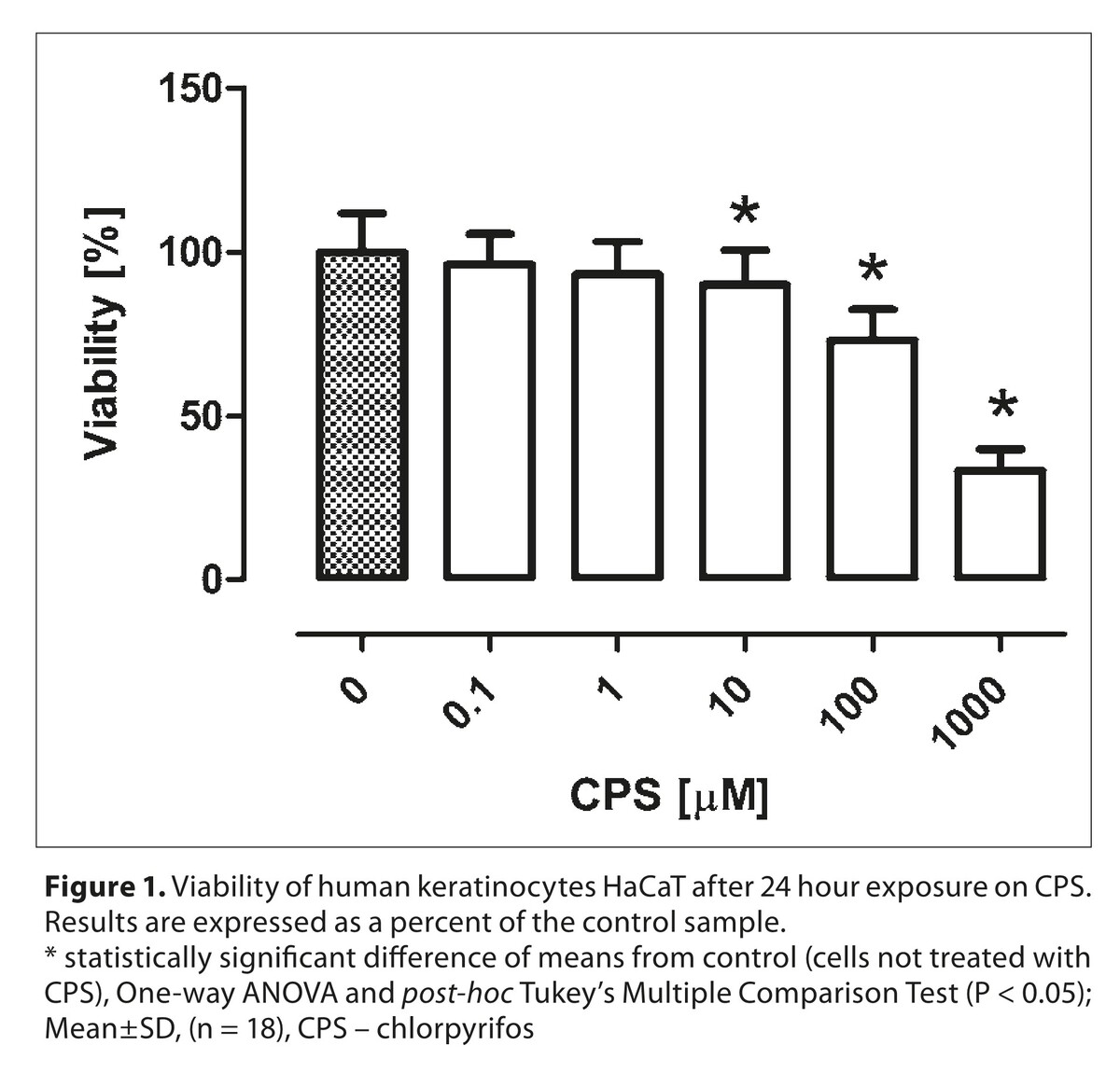
The study demonstrated that CPS exhibits significantly higher toxicity and genotoxicity, compared to GLY. The Ames test showed that CPS possesses mutagenic potential (strain TA98) only after activation with the S9 fraction, remaining inactive against strain TA100. Although GLY did not induce mutations in strain TA98, at the highest concentration (1,000 μM), it caused substitution mutations (strain TA100).
Conclusions:
Due to the complexity of pesticide biotransformation mechanisms and their diverse impact on genetic material, relying on a single test system is insufficient. To obtain a reliable safety assessment and capture the full spectrum of potential damage, it is necessary to combine bacterial methods, with cytogenetic studies on mammalian cells. Such a complementary approach eliminates errors resulting from the high cytotoxicity of pesticides toward bacteria, and enables the analysis of DNA mutations in non-bacterial models. Further research into the impact of these compounds on the genetic material of living organisms is therefore necessary, but using a greater number of biological models, as well as other methods to resolve this issue.
Beyond acute and chronic poisoning, scientific attention in recent years has shifted toward the negative effects of pesticides on genetic material. Numerous studies demonstrate that these compounds possess both genotoxic and mutagenic potential. Therefore, the aim of this study is to investigate and compare the potential of chlorpyrifos (CPS) and glyphosate (GLY) to induce DNA damage.
Material and methods:
Human immortalized keratinocytes cell line HaCaT were used as the test organisms in viability (Neutral Red assay) and genotoxicity assays (Comet assay). To test the mutagenicity, S. typhimurium strains TA98 and TA100 assay was used in microplate format.
Results:
The study demonstrated that CPS exhibits significantly higher toxicity and genotoxicity, compared to GLY. The Ames test showed that CPS possesses mutagenic potential (strain TA98) only after activation with the S9 fraction, remaining inactive against strain TA100. Although GLY did not induce mutations in strain TA98, at the highest concentration (1,000 μM), it caused substitution mutations (strain TA100).
Conclusions:
Due to the complexity of pesticide biotransformation mechanisms and their diverse impact on genetic material, relying on a single test system is insufficient. To obtain a reliable safety assessment and capture the full spectrum of potential damage, it is necessary to combine bacterial methods, with cytogenetic studies on mammalian cells. Such a complementary approach eliminates errors resulting from the high cytotoxicity of pesticides toward bacteria, and enables the analysis of DNA mutations in non-bacterial models. Further research into the impact of these compounds on the genetic material of living organisms is therefore necessary, but using a greater number of biological models, as well as other methods to resolve this issue.
FUNDING
This research was funded by the Institute of Rural
Health in Lublin from statutory funds allocated for the
financing of scientific study No. 23030.
PEER REVIEW INFORMATION
Article has been screened for originality
REFERENCES (25)
1.
Franco-Bernardes MF, Rocha OP, Pereira LC, et al. The herbicides trifluralin and tebuthiuron have no genotoxic or mutagenic potential as evidenced by genetic tests. Environ Sci Pollut Res Int. 2017 Oct;24(30):24029–24037. doi:10.1007/s11356-017-9966-5.
2.
Yaduvanshi SK, Srivastava N, Marotta F, et al. Evaluation of micronuclei induction capacity and mutagenicity of organochlorine and organophosphate pesticides. Drug Metab Lett. 2012 Sep 1;6(3):187–97. doi:10.2174/1872312811206030006.
3.
Essa SS, El-Saied EM, El-Tawil OS, et al. Nanoparticles of zinc oxide defeat chlorpyrifos-induced immunotoxic effects and histopathological alterations. Vet World. 2019;12(3):440–448. doi:10.14202/vetworld.2019.440-448.
4.
Sandhu MA, Saeed AA, Khilji MS, et al. Genotoxicity evaluation of chlorpyrifos: a gender related approach in regular toxicity testing. J Toxicol Sci. 2013;38(2):237–44. doi:10.2131/jts.38.237.
5.
Lu YC, Chiang CY, Chen SP, et al. Chlorpyrifos-induced suppression of the antioxidative defense system leads to cytotoxicity and genotoxicity in macrophages. Environ Toxicol Pharmacol. 2024 Jun;108:104468. doi:10.1016/j.etap.2024.104468.
6.
Ayanda OI, Tolulope A, Oniye SJ. Mutagenicity and genotoxicity in juvenile African catfish, Clarias gariepinus exposed to formulations of glyphosate and paraquat. Sci Prog. 2021 Apr-Jun;104(2):368504211021751. doi:10.1177/00368504211021751.
7.
Alvarez-Moya C, Reynoso-Silva M. Assessment of Genetic Damage Induced via Glyphosate and Three Commercial Formulations with Adjuvants in Human Blood Cells. Int J Mol Sci. 2023 Feb 25;24(5):4560. doi:10.3390/ijms24054560.
8.
Hayashi M. Opinion: regulatory genotoxicity: past, present and future. Genes Environ. 2022 Apr 22;44(1):13. doi:10.1186/s41021-022-00242-5.
9.
Sassa A, Fukuda T, Ukai A, et al. Follow-up genotoxicity assessment of Ames-positive/equivocal chemicals using the improved thymidine kinase gene mutation assay in DNA repair-deficient human TK6 cells. Mutagenesis. 2021 Oct 6;36(5):331–338. doi:10.1093/mutage/geab025.
10.
Kašuba V, Micek V, Milić M, et al. The effect of low doses of chlorpyrifos on blood and bone marrow cells in Wistar rats. Arh Hig Rada Toksikol. 2022 Sep 30;73(3):223–232. doi:10.2478/aiht-2022-73-3665.
11.
Madia F, Kirkland D, Morita T, et al. EURL ECVAM Genotoxicity and Carcinogenicity Database of Substances Eliciting Negative Results in the Ames Test: Construction of the Database. Mutat Res Genet Toxicol Environ Mutagen. 2020 Jun-Jul;854–855:503199. doi:10.1016/j.mrgentox.2020.503199. Erratum in: Mutat Res Genet Toxicol Environ Mutagen. 2020 Oct – Dec;858–860:503274. doi:10.1016/j.mrgentox.2020.503274.
12.
Egorova OV, Ilyushina NA, Rakitskii VN. Mutagenicity evaluation of pesticide analogs using standard and 6-well miniaturized bacterial reverse mutation tests. Toxicol In Vitro. 2020 Dec;69:105006. doi:10.1016/j.tiv.2020.105006.
13.
Zeyad MT, Kumar M, Malik A. Mutagenicity, genotoxicity and oxidative stress induced by pesticide industry wastewater using bacterial and plant bioassays. Biotechnol Rep (Amst). 2019 Oct 24;24:e00389. doi:10.1016/j.btre.2019.e00389.
14.
Cortés-Eslava J, Gómez-Arroyo S, Arenas-Huertero F, et al. The role of plant metabolism in the mutagenic and cytotoxic effects of four organophosphorus insecticides in Salmonella typhimurium and in human cell lines. Chemosphere. 2013 Aug;92(9):1117–25. doi:10.1016/j.chemosphere.2013.01.058.
15.
Naime AA, Lopes MW, Colle D, et al. Glutathione in Chlorpyrifos-and Chlorpyrifos-Oxon-Induced Toxicity: a Comparative Study Focused on Non-cholinergic Toxicity in HT22 Cells. Neurotox Res. 2020 Oct;38(3):603–610. doi:10.1007/s12640-020-00254-5.
16.
Czajka M, Sawicki K, Matysiak-Kucharek M, et al. Exposure to Chlorpyrifos Alters Proliferation, Differentiation and Fatty Acid Uptake in 3T3-L1 Cells. Int J Mol Sci. 2023 Nov 7;24(22):16038. doi:10.3390/ijms242216038.
17.
Montanarí C, Franco-Campos F, Taroncher M, et al. Chlorpyrifos induces cytotoxicity via oxidative stress and mitochondrial dysfunction in HepG2 cells. Food Chem Toxicol. 2024 Oct;192:114933. doi:10.1016/j.fct.2024.114933.
18.
Silva AM, Martins-Gomes C, Silva TL, et al. In Vitro Assessment of Pesticides Toxicity and Data Correlation with Pesticides Physicochemical Properties for Prediction of Toxicity in Gastrointestinal and Skin Contact Exposure. Toxics. 2022 Jul 8;10(7):378. doi:10.3390/toxics10070378.
19.
López González EC, Odetti LM, Latorre MA, et al. A comprehensive approach using multiple biomarkers to detect damage induced by pesticides in broad-snouted caiman (Caiman latirostris) under ex-situ conditions. Heliyon. 2021 Dec 24;8(1):e08667. doi:10.1016/j.heliyon.2021.e08667.
20.
Milić M, Žunec S, Micek V, et al. Oxidative stress, cholinesterase activity, and DNA damage in the liver, whole blood, and plasma of Wistar rats following a 28-day exposure to glyphosate. Arh Hig Rada Toksikol. 2018 Jun 1;69(2):154–168. doi:10.2478/aiht-2018-69-3114.
21.
Roma D, Cecchini ME, Tonini MP, et al. Toxicity assessment and DNA repair kinetics in HEK293 cells exposed to environmentally relevant concentrations of Glyphosate (Roundup® Control Max). Toxicol Res (Camb). 2023 Sep 30;12(5):970–978. doi:10.1093/toxres/tfad089.
22.
Gollapudi BB, Mendrala AL, Linscombe VA. Evaluation of the genetic toxicity of the organophosphate insecticide chlorpyrifos. Mutat Res. 1995 Mar;342(1–2):25–36. doi:10.1016/0165-1218(95)90087-x.
23.
Isidori M, Caterino E, Criscuolo E, et al. Antimutagenic and antigenotoxic effects of vegetable matrices on the activity of pesticides. Food Addit Contam Part A Chem Anal Control Expo Risk Assess. 2009 Jul;26(7):1049–62. doi:10.1080/02652030902896194.
24.
Rank J, Jensen AG, Skov B, et al. Genotoxicity testing of the herbicide Roundup and its active ingredient glyphosate isopropylamine using the mouse bone marrow micronucleus test, Salmonella mutagenicity test, and Allium anaphase-telophase test. Mutat Res. 1993 Jun;300(1):29–36. doi:10.1016/0165-1218(93)90136-2.
25.
Ilyushina N, Egorova O, Rakitskii V. Limitations of pesticide genotoxicity testing using the bacterial in vitro method. Toxicol In Vitro. 2019 Jun;57:110–116. doi:10.1016/j.tiv.2019.02.018.
Share
RELATED ARTICLE
| eISSN: | 1898-2263 |
| ISSN: | 1232-1966 |


Generation of the DOI (Digital Object Identifier) - task financed under the agreement No NrRCN/SP/0532/2021/1 by the Minister of Science and Higher
© 2006-2026 Journal hosting platform by Bentus
We process personal data collected when visiting the website. The function of obtaining information about users and their behavior is carried out by voluntarily entered information in forms and saving cookies in end devices. Data, including cookies, are used to provide services, improve the user experience and to analyze the traffic in accordance with the Privacy policy. Data are also collected and processed by Google Analytics tool (more).
You can change cookies settings in your browser. Restricted use of cookies in the browser configuration may affect some functionalities of the website.
You can change cookies settings in your browser. Restricted use of cookies in the browser configuration may affect some functionalities of the website.